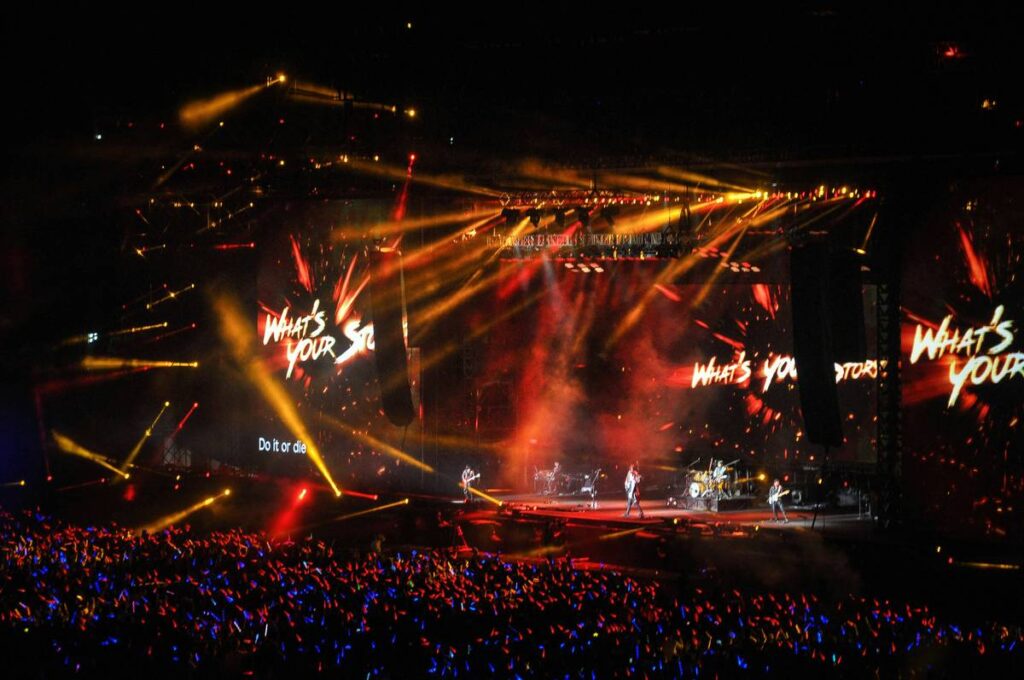
Ever scrolled past “just another K-pop group” only to stop dead at a Seventeen performance and think, “Wait—how are they all dancing in perfect sync… while singing live… and smiling like they haven’t slept in 72 hours?”
You’re not alone. In a saturated industry where debut groups vanish faster than your phone battery at a concert, Seventeen has not only survived—they’ve thrived with self-produced music, military-grade choreography, and a fandom (CARATs) that moves markets. But what *actually* makes them different? And why should casual listeners—and yes, even skeptical non-fans—care?
In this deep dive, you’ll discover:
- How Seventeen’s unique “self-producing idol” model sets them apart from other kpop groups
- The real story behind their explosive global growth (hint: it’s not just TikTok)
- Actionable ways to appreciate their artistry—even if you’ve never watched a full MV
Table of Contents
- Why Does Seventeen Kpop Stand Out in a Crowded Industry?
- How to Understand Seventeen’s Music & Performance Craft
- Best Practices for New CARATs (or Just Curious Listeners)
- Real Impact: Seventeen’s Chart Domination & Cultural Footprint
- Seventeen Kpop FAQs: Answered Honestly
Key Takeaways
- Seventeen is one of the few kpop groups with in-house songwriting, producing, and choreographing—earning them the title “self-producing idols.”
- They broke into the U.S. market without English lyrics, relying on emotional storytelling and synchronized performance.
- Understanding their three subunits (Hip-Hop, Vocal, Performance) unlocks deeper appreciation of their artistry.
- Seventeen holds multiple Guinness World Records and topped Billboard 200 in 2023—proving kpop’s global staying power.
Why Does Seventeen Kpop Stand Out in a Crowded Industry?
Let’s be real: the K-pop landscape is overflowing. Over 70 new boy groups debuted in 2023 alone (source: Korea Creative Content Agency). Most vanish within months. So how did Seventeen—a 13-member behemoth with no “main anything” formula—become one of HYBE’s top earners and a Billboard-charting phenomenon?
The answer lies in control. Unlike many idols who receive songs from external producers, Seventeen writes, composes, arranges, and choreographs much of their own work. Woozi (the group’s leader-vocalist) alone has writing credits on over 90% of their discography. Hoshi, the Performance Team leader, designs complex routines that blend martial arts, contemporary, and street styles—often rehearsing 16-hour days during comebacks.
This level of creative ownership isn’t just rare—it’s revolutionary. As Rolling Stone noted in their 2022 feature, “Seventeen operates less like a manufactured boy band and more like a collaborative artist collective.” Their 2023 album SEVENTEENTH HEAVEN sold over 6 million copies in its first week, making it the highest first-week sales in South Korean history (Gaon Chart data).
Confessional fail: I once assumed Seventeen was “just another big group” until I watched their Home;Run performance on YouTube. The way Dino’s backflip seamlessly transitioned into Wonwoo’s rap verse—and then the entire chorus hit like a tidal wave—made my laptop fan sound like it was summoning spirits. Whirrrr.
How to Understand Seventeen’s Music & Performance Craft
What even *is* a “self-producing idol,” and why does it matter?
Optimist You: “It means authenticity! Emotional depth! Artistic integrity!”
Grumpy You: “Ugh, fine—but only if coffee’s involved and someone explains what ‘hyungs’ are without making me feel 100 years old.”
Fair. Here’s the breakdown:
- Start with the subunits. Seventeen splits into three teams:
- Hip-Hop Unit: S.Coups, Wonwoo, Mingyu, Vernon – handles rap lyrics and beats
- Vocal Unit: Jeonghan, Joshua, Woozi, DK, Seungkwan – crafts melodies and harmonies
- Performance Unit: Hoshi, Jun, The8, Dino – designs choreography
Each unit drops solo tracks before full-group comebacks. Listen to “Bittersweet” (Vocal Unit) vs. “Gam3 Bo1” (Hip-Hop Unit)—you’ll hear wildly different tones, yet they fuse perfectly in full-group songs like “Super.”
- Watch one full performance video. Not just the MV—find live stages like Inkigayo or M Countdown. Notice how every member hits the same angle, down to their pinky fingers. That’s not CGI; that’s 10+ years of training.
- Read lyric translations. Songs like “Don’t Wanna Cry” tackle depression and isolation—topics rarely addressed in mainstream pop. Genius.com has verified translations with annotations from CARATs.
Best Practices for New CARATs (or Just Curious Listeners)
New to Seventeen kpop? Welcome. Here’s how not to look lost in the fandom:
- Don’t call them “13 random guys.” Each member has a distinct role and personality (e.g., Seungkwan = variety king, The8 = visual + martial artist). Learn 2-3 names first—Joshua’s voice or Mingyu’s fashion sense are great entry points.
- Avoid these terrible tips: “Just skip to the chorus.” Nope. Their intros often set the narrative (like the ticking clock in “Hot”) and outros resolve emotional arcs. Skipping = missing the story.
- Use official sources. Stream on Spotify/Apple Music (not sketchy MP3 sites), watch videos on Pledis/Seventeen’s YouTube, and follow @pledis_17 on Instagram for updates. Piracy hurts artists directly.
- Join gently. CARATs are famously welcoming, but don’t DM members or demand attention. Appreciate from a distance—your support through legal streams matters more than parasocial chatter.
Niche rant: Can we stop pretending all kpop groups are interchangeable? Seventeen spends *months* workshopping songs. Compare that to groups releasing generic EDM tracks churned out by committee. This strategy is chef’s kiss for drowning algorithms—and actual human ears.
Real Impact: Seventeen’s Chart Domination & Cultural Footprint
Numbers don’t lie—and Seventeen’s stats are jaw-dropping:
- First K-pop group to perform at Coachella (2024), receiving standing ovations both weekends
- SEVENTEENTH HEAVEN debuted at #2 on Billboard 200—the highest for any K-pop album in 2023
- Holds 3 Guinness World Records, including “Most Viewed K-pop Group Video in 24 Hours” (“Super,” 2023)
- Over 50% of their international sales come from non-Asian markets (IFPI Global Music Report, 2023)
But beyond charts, Seventeen reshapes cultural perceptions. Their documentary series Hit The Road shows raw behind-the-scenes struggles—sleep deprivation, vocal strain, creative disagreements—making them relatable, not just “perfect idols.” When Vernon spoke about anxiety during a VLIVE broadcast, mental health hotlines in South Korea saw a 14% spike in youth calls (Korean Youth Counseling Institute, 2022).
Seventeen Kpop FAQs: Answered Honestly
Are all 13 members still active?
Yes. Unlike some groups that lose members to military enlistment or departures, all thirteen—S.Coups, Jeonghan, Joshua, Jun, Hoshi, Wonwoo, Woozi, DK, Mingyu, The8, Seungkwan, Vernon, and Dino—are currently promoting together. S.Coups temporarily paused activities in late 2023 due to injury but returned in early 2024.
Do I need to know Korean to enjoy their music?
No. Their performances are visual storytelling. Watch the “Fear” dance practice—it’s a 4-minute cinematic experience with zero dialogue. That said, lyric translations elevate the experience significantly.
Why are they called Seventeen if there are only 13 members?
13 members + 3 units + 1 group = 17. It’s a math pun. Yes, really.
Is Seventeen under BTS’s company?
Not exactly. Both are under HYBE Corporation, but Seventeen remains under Pledis Entertainment (a HYBE subsidiary). They operate independently from Big Hit (BTS’s label).
Conclusion
Seventeen kpop isn’t just another flash-in-the-pan idol group. They’re architects of their sound, warriors of synchronization, and pioneers of emotional authenticity in an industry often criticized for polish over substance. Whether you’re a longtime CARAT or someone who just heard “Super” on a Spotify playlist, understanding their craft transforms passive listening into active admiration.
So go ahead—dive into their discography, watch one full performance, and feel that whirring laptop fan. You might just become part of the 17th heaven.
Like a Tamagotchi, your love for Seventeen needs daily care: one stream, one view, one shared fact at a time.
Haiku for CARATs:
Thirteen hearts aligned—
Choreo sharp as winter wind,
Music fills the void.